
Party Wall Agreement For Loft Conversion: A Detailed Guide
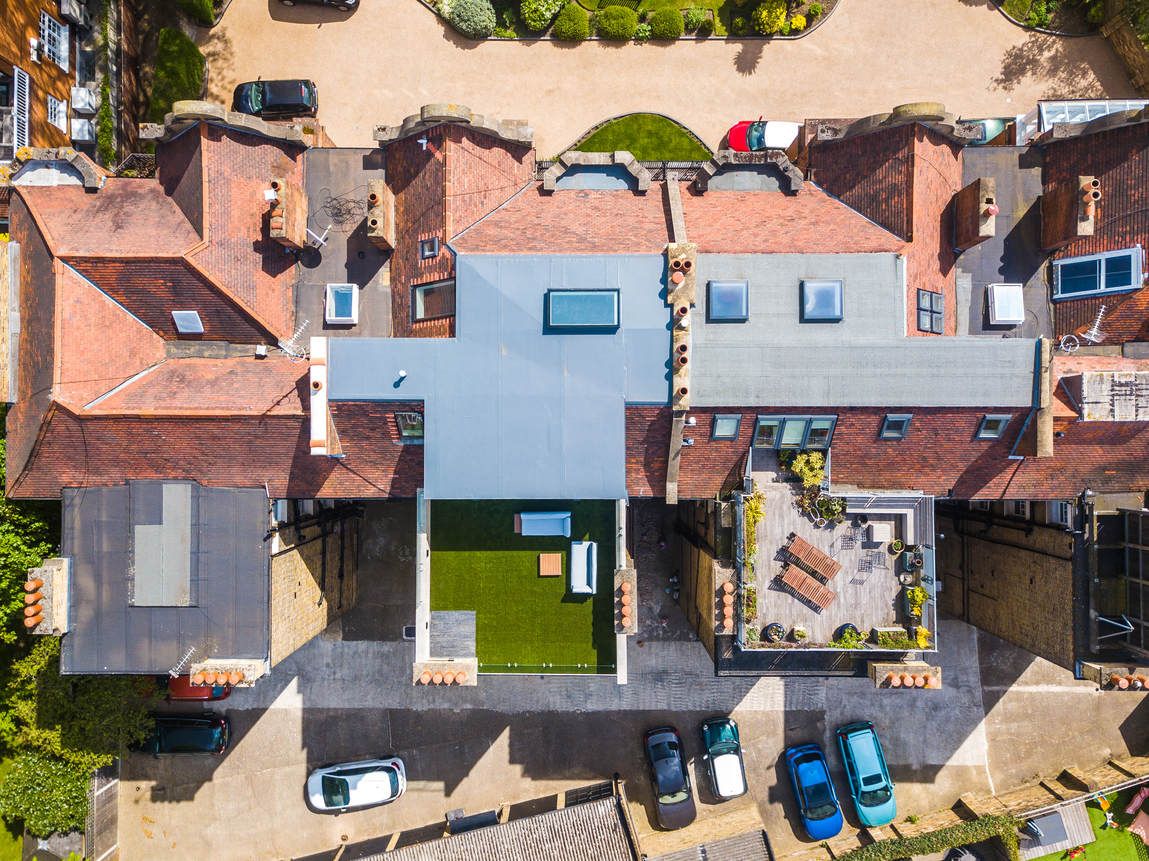
Do I need a party wall agreement for a loft conversion?
The need for a party wall agreement often applies to loft conversions and to other types of extensions. If your loft has adjoining properties, you must have a party wall agreement in place with your neighbours, according to the Party Wall Act 1996. Adjoining property owners have specific rights and must be notified under the Party Wall etc. Act 1996 before any work begins. The act always applies if you need to work on a shared wall or other shared structures.
This is very often the case for loft conversions and other extensions, because the party walls are usually the best option as load bearing walls. Loft conversions often affect party walls, making an agreement necessary to ensure all legal requirements are met. The reason is that party walls don't have openings like windows or doors, so they make for the most solid choice for a load bearing wall.
Certain types of work, especially those involving a loft conversion party wall, require party wall agreements. Party wall agreements must be in place with all the leaseholders and the freeholder of the adjoining properties.

What is a Party Wall?
A wall is a party wall if it stands astride the boundary of land belonging to two (or more) different owners. This definition often applies to adjoining houses like terraced or semi-detached houses. A wall is also considered a party wall if it is shared with other owners, as in the case of ceiling and floor of two properties, one below the other. A party structure includes any shared walls, floors, or boundaries between properties.
As a general rule, a wall is a party wall whenever damage to that wall, or structure in general, could damage other owners' properties. Modifications to a shared structure can impact neighbouring properties and may require formal agreements under the Party Wall Act 1996. For example, when excavation is required, the party wall can apply to properties that are up to a 6m distance from the place of excavation.
Such damage can affect a neighbour's property as well as the owner's, making it important to follow the correct legal procedures.
What is the Party Wall Act 1996?
The Party Wall Act etc 1996 provides a Building Owner, who wishes to carry out various sorts of work to an existing party wall, with additional rights going beyond ordinary common law rights. The property owner must follow specific procedures under the Act to ensure compliance and avoid disputes.
All the details on party walls and if and when you need a party wall agreement can be found in the Party Wall etc. Act 1996. It is meant to prevent and resolve disputes between neighbours when works on adjoining properties are carried out by the owners. Party structure notices are formal documents required to inform neighbours about proposed works affecting shared structures, and are a key part of the notification process.
The Party Wall Act regulates the legal process to inform the affected parties about planned building works that affect shared structures, the timing, the form and the rights and duties of each party involved.
Under the Party Wall Act, building owners who intend to carry out building works involving existing party walls have to inform the adjoining owners about the work. A party structure notice must be served, and a written agreement or written permission must be obtained from the affected property owner before work can begin. A party wall agreement is the consent to the works given by the parties involved.
What is a Party Wall Agreement?
The party wall agreement is a written consent by neighbours on the building works you intend to carry out. Adjustments in the timing and manner of the works might be requested by the neighbours to reach the agreement.
The Party Wall Act prescribes that you inform your neighbours of the works you intend to carry out. This is done serving a party wall notice, that must include:
- Your own name and address
- The address of the building to be worked on
- A detailed description of what you propose to do, and you must provide details such as plans, drawings, and the scope of work
- When you propose to start
Example letters are available to help homeowners draft proper party wall notices.
You can produce and serve this document or you can use a party wall surveyor to represent you. Your neighbours can also appoint a surveyor. In general, you will need to meet all the costs for surveyors, including your neighbours'.
For loft conversions, the notice must be served at least 2 months before the planned start of the works.

Do I Need a Party Wall Agreement for a Loft Conversion?
When planning a loft conversion, you will need a party wall agreement if you are going to work on any element that belongs to one or more adjoining properties. Structural changes to shared walls, chimneys, or other elements during a loft conversion typically require a party wall agreement under the Party Wall Act 1996.
Work Requiring a Party Wall Agreement
| Type of Work | Agreement Required? | Notes |
|---|---|---|
| Cutting into party wall for load-bearing beam | Yes | Most common trigger for loft conversions |
| Removing chimney breast from party wall | Yes | Affects structural integrity of shared wall |
| Underpinning party wall foundations | Yes | Required for major structural work |
| Increasing wall thickness or height | Yes | Any modification to shared wall structure |
| Inserting damp proof course (full length) | Yes | Affects both sides of the wall |
| Cutting projections off party wall | Yes | Alters wall profile |
| Demolishing and rebuilding part of wall | Yes | Major structural modification |
| Beam on purpose-built columns (not party wall) | No | Alternative design avoiding party wall |
| Detached house loft conversion | No | No shared walls with neighbours |
| Internal work not affecting party wall | No | E.g., installing Velux windows on own roof |
If a dispute arises, each party may appoint their own surveyor, and there may be multiple surveyors involved in the process to ensure impartiality and resolve any disagreements.
Can I Do a Loft Conversion Without a Party Wall Agreement?
It is possible that you won't need a party wall agreement for a loft conversion. In general, you won't need it if the works are not going to involve a wall that is shared with an adjoining property.
An agreement is not needed if:
- The loft is being built on top of a stand alone or detached house
- The beam to support the loft conversion is placed over a purpose built column, instead of placing it inside the party wall
In the latter case, the beam is placed on two opposing walls that are not party walls, using purpose built columns for structural support. We used this solution for one of our projects, where the party wall process was particularly complicated.
However, if any part of the work would affect a shared wall, you will still need written permission from your neighbour before proceeding.
How Much Does a Party Wall Agreement Cost?
The cost of a party wall agreement for a loft conversion varies depending on how your neighbour responds and whether surveyors are needed.
| Scenario | Cost Range | Includes | Timeline |
|---|---|---|---|
| Neighbour Consents Best case scenario | £700 - £1,000 | Notice preparation, schedule of condition | 2-4 weeks |
| Agreed Surveyor One surveyor for both parties | £1,000 - £1,500 | Notice, survey, Party Wall Award | 4-6 weeks |
| Separate Surveyors Each party appoints own surveyor | £1,500 - £3,000 | Two surveyors, negotiations, Award | 6-10 weeks |
| Complex Dispute Third surveyor required | £3,000 - £5,000+ | Three surveyors, extended negotiations | 3-6 months |
Important: As the building owner, you typically pay all surveyor fees, including your neighbour's surveyor. Surveyor hourly rates range from £150-£300/hour. Using an Agreed Surveyor is usually more cost-effective.
Issuing a Party Wall Notice
As mentioned, you can create and serve the party wall notice yourself. You will need to include:
- Your own name and address
- The address of the building to be worked on
- A full description of what you propose to do, that might use plans and drawings
- When you propose to start
It is advisable you clearly state that the letter is a party wall notice, as this helps clarify party wall matters and ensures compliance with the Party Wall Act.
You may deliver the notice in person, send it by post, or send it by email. If you do not have the details of the owner, you can deliver it to the property and address it to "The owner of the property" at that address.
It is important to keep copies of all party wall matters, including notices and agreements, with your property deeds for future reference.
Party Wall Notice Checklist
| Required Element | Description | Tips |
|---|---|---|
| Your Name and Address | Full legal name and current address | Use address where you can receive correspondence |
| Property Address | Address where work will be done | Must match property records |
| Detailed Description of Works | Clear explanation of proposed work | Include plans and drawings where possible |
| Proposed Start Date | When you plan to begin construction | Must be at least 2 months from notice date |
| Clear Statement | "This is a Party Wall Notice" | Explicitly state the document's purpose |
| Response Form | Include acknowledgment form for neighbour | Makes consent process easier |
Party Wall Agreement Template
Templates of party wall notices are available for free from many sources online. You can download our Party wall notice for loft conversions template.
To make the process smoother, it includes the positive acknowledgment response, to be sent together with the notice.
How Long in Advance Do I Need to Serve the Notice?
The term to serve the notice is at least two months before the starting date. The notice is only valid for a year, so it's better to serve it not too long before you wish to start.
Party Wall Agreement Timeline
Step 1: Prepare Notice
Week 1 — Create party wall notice with property details, proposed works, and start date. Use template or hire surveyor.
Step 2: Serve Notice
Week 1-2 — Deliver notice to all adjoining owners. Must be at least 2 months before planned start date.
Step 3: Wait for Response
14 days — Neighbour has 14 days to consent, refuse, or do nothing. No response = dispute.
Step 4a: If Consent Given
Week 3-4 — Document existing condition with photos. Ready to proceed once 2-month notice period expires.
Step 4b: If Disputed
Week 3-8 — Appoint surveyors. Agreed Surveyor is faster (2-4 weeks). Separate surveyors take longer (4-8 weeks).
Step 5: Party Wall Award
Week 6-10 — Surveyors issue Award documenting agreed terms. You can now begin loft conversion work.
Timeline Summary by Scenario
| Scenario | Minimum Time | Typical Time | Maximum Time |
|---|---|---|---|
| Neighbour consents immediately | 2 months | 2-3 months | 3 months |
| Agreed Surveyor needed | 2.5 months | 3-4 months | 4 months |
| Separate surveyors | 3 months | 4-5 months | 6 months |
| Complex dispute | 4 months | 5-6 months | 12+ months |
What Happens After I Serve the Notice?
Your neighbours have several options after they receive your party wall notice:
- Give consent in writing
- Refuse to consent to the works proposed
- Do nothing
If nothing happens after 14 days or your neighbour refuses, it is considered as a dispute happening—if a dispute arises, a party wall award is required and surveyors need to be appointed. Surveyor's fees are typically paid by the building owner and can be a significant part of the overall cost.
Neighbour Response Options
| Response | What It Means | Your Next Step | Cost Impact |
|---|---|---|---|
| Written Consent | Neighbour agrees to works | Document existing condition, proceed after notice period | Lowest (£700-£1,000) |
| No Response (14 days) | Treated as a dispute | Appoint party wall surveyor to create Award | Medium (£1,500-£3,000) |
| Refuses Consent | Dispute triggered | Appoint surveyors (Agreed or separate) | Medium-high (£1,500-£5,000) |
| Requests Changes | Conditional agreement | Negotiate modifications, may need surveyor | Variable (£1,000-£2,500) |
Key Point: Your neighbour cannot permanently stop your loft conversion through a party wall dispute. The Party Wall Act provides a mechanism to resolve disputes and allow work to proceed with appropriate protections.
Approval
If your neighbour gives consent in writing, you can proceed with your planned works. It is advisable to assess the current status of the party wall on your neighbours' side, taking pictures as evidence. This helps in case disputes arise later, after the works have started.
You can do this yourself or appoint a surveyor to do so.
It is possible that your neighbours appoint a surveyor to assess the existing status.
Refusal
If your neighbour dissents or doesn't reply in 14 days, you will need to appoint a surveyor to draw up a Party Wall Award.
The best option is to have an Agreed Surveyor. Alternatively, you will appoint a surveyor each. The two appointed surveyors will select a third surveyor, who would be called in only if the two appointed surveyors cannot agree or either of the owners or either surveyor calls upon the third surveyor to make an award.
In all cases, the surveyors have the duty to resolve matters in a fair and practical way.
The Role of the Adjoining Owner
The adjoining owner is a key participant in the party wall agreement process for loft conversions. As the neighbour whose property shares a wall or structure with the building owner, the adjoining owner's main concern is to ensure that any building work—such as a loft conversion—does not negatively impact their property. The Party Wall Act 1996 is specifically designed to protect the interests of both parties involved, providing a fair and practical way to manage building works that affect shared walls.
When a party wall notice is served, the adjoining owner has a legal right to be informed about the proposed works. They are given 14 days to respond to the notice, during which they can either consent to the works, or dissent and appoint their own party wall surveyor. If the adjoining owner chooses to dissent, this triggers the need for a party wall award, which is a formal document prepared by party wall surveyors outlining how the work should proceed to protect both properties.
The adjoining owner's surveyor works alongside the building owner's surveyor to ensure that the party wall agreement is balanced and that any potential risks to the adjoining property are addressed. This may include recommending additional support, such as new steel beams or protective measures, to safeguard the shared wall during the loft conversion. Any requests or modifications made by the adjoining owner should be clearly detailed in the party wall agreement, ensuring that all parties are aware of their responsibilities and the agreed solutions.
How to Find a Party Wall Surveyor
You can find a party wall surveyor from the pages of the Faculty of Party Wall Surveyors.
Frequently Asked Questions
How much does a party wall agreement cost for a loft conversion?
Costs range from £700-£1,000 if neighbours consent quickly, to £1,500-£3,000 if surveyors are needed. Complex disputes can cost £3,000-£5,000+ per neighbour. As the building owner, you typically pay all surveyor fees.
How long before work do I need to serve a party wall notice?
You must serve notice at least 2 months before your planned start date for loft conversions. The notice is valid for 1 year, so don't serve it too early.
Can my neighbour stop my loft conversion?
No, your neighbour cannot permanently stop your loft conversion through a party wall dispute. The Party Wall Act 1996 provides a mechanism to resolve disputes through surveyors who will create a Party Wall Award allowing work to proceed.
What happens if my neighbour doesn't respond to the notice?
If there's no response within 14 days, it's treated as a dispute. You'll need to appoint a party wall surveyor to create a Party Wall Award before proceeding.
Do I need a party wall agreement for a dormer loft conversion?
Yes, if the dormer construction requires cutting into or using a party wall for structural support. If the dormer is built entirely on your side without affecting shared structures, you may not need one.
Who pays for the party wall surveyor?
As the building owner carrying out the work, you typically pay all surveyor costs including your neighbour's surveyor fees. Hourly rates range from £150-£300.
What is an Agreed Surveyor?
An Agreed Surveyor is a single surveyor appointed to act for both you and your neighbour. This is usually more cost-effective and faster than each party appointing separate surveyors.
Can I serve a party wall notice myself?
Yes, you can create and serve the notice yourself using a template. However, many homeowners prefer to use a party wall surveyor to ensure the notice is legally correct and complete.
Loft Conversion with houseUP
At houseUP we can help make your loft conversion process easier. Our experience covers all types of loft conversions in London.
Contact us for free advice on how to sort out issues with party wall agreements and loft conversions in London.


Gen is managing director and chief of digital strategy at houseUP. She has a background in information security and product management in tech startups.
houseUP is a construction company in London, specialised in high end residential and commercial projects.